Quantcast
Showing posts with label conventions. Show all posts

Showing posts with label conventions. Show all posts

Otakon 2011: Japan's Apocalyptic Imagination Panel Report

4 comments

“Japan's Apocalyptic Imagination in Anime, Manga and Art,” a panel at Otakon 2011, featured essayist and Japanamerica author Roland Kelts, who offered examples of apocalyptic imagery in Japanese art and pop culture, put them into historical and cultural perspectives, and analyzed them. While the focus of his examples was definitely anime films, Kelts went as far back as Katsushika Hokusai's famous woodblock print The Great Wave off Kanagawa (pictured right) to show how apocalyptic imagery is nothing new to the island nation’s creative focus.

The Great Wave..., published between 1830 and 1833, depicts a large wave immediately threatening boats off the shore of Kanagawa Prefecture. While almost 50% of the frame is taken up by the wave, its ominous nature can actually be attributed to how tiny Mt. Fuji, a symbol of Japanese pride and culture, is by comparison. Another threatening aspect noted by Kelts is the crest of the wave, which seems lined with "clawing fingers." Hokusai, according to Kelts, has often been referred to as a precursor or gateway to modern manga. And with that smooth transition, together with the statement that anime and manga have always been at least in part a response to catastrophes (which I’ll explain a little further down), the discussion shifted to the God of Manga, Osamu Tezuka.

Kelts specifically noted Astro Boy, which emerged after World War II, and pointed out how the story uses radiation as an aspect of creation rather than destruction. This "boy born of radiation" shows a faith in the same technology (or along the lines thereof) that delivered such a crushing blow to life not even a decade earlier. Along the same lines, Kelts offered up a similar method of thinking regarding the resurrection of the Japanese battleship Yamato, which was the pride of the country’s naval fleet as one of its most technologically advanced WWII warships. After its defeat, the Yamato came back to life via fiction as a technologically superior spaceship ("Take THAT, America!"). In addition to Kelts also mentioned the birth of mecha as means to fight the disillusionment with current technology. In all instances, destructive new technology didn’t bring about fear in art but rather promise as well as hope that what has been survived can be learned from and built upon to become stronger.

Next Kelts focused on two anime film directors, Hayao Miyazaki and Isao Takahata, and their specific works. Perhaps to take advantage of Ponyo’s immediacy, Kelts pointed to this Miyazaki film as a shining example of the portrayal of natural disasters and Japanese natives’ reactions to them. Kelts focused specifically on the scene where personified waves of a storm are reaching up and over the road with cars, which are trying to escape. Kelts said that this portrayal is not a malicious one but rather a dangerous fact of life. He said that the eyes in the waves had a sort of aimless, "staring into space" aspect that relayed the same sense of natural innocence as another one of Miyazaki’s creations, Totoro.

Kelts pointed out one scene in particular from My Neighbor Totoro built on a couple of images meant to evoke memories of the Japanese people who went through WWII. In this particular scene, characters in mismatched clothes watch as a man drives off into the countryside in a jalopy. According to Kelts, this scene was one that took place in many homes during WWII as those types of cars were simply what were available and clothing supplies were scarce. In all, Kelts concluded that since Miyazaki’s family was one of relative privilege and could afford to escape the paths of destruction, that personal history is what colors his work.

This contrasts Isao Takahata’s Grave of the Fireflies, which is tied to the notion of not being able to escape and having to deal with the event as well as its aftereffects. Most of the movie, after all, centers around trying to define and etch out an existence after an American firebombing raid consumes life as the children had known it. Kelts said the differing vantages between directors makes sense given the fact that Takahata’s family was of lesser means and could not afford to escape.

After a few more specific examples of the panel, an audience member asked if there was a difference in how man-made and natural disasters are depicted. Kelts postulated that manmade disasters serve as an analogy to the evil that resides within all of us. He noted that even historical apocalyptic depictions spare specific countries any finger pointing. Instead the focus of most anime that deals with man-made apocalyptic scenarios open with disasters instead of trying to prevent them (as with the majority of Western media). This further demonstrates the themes of coping with and overcoming ourselves. Natural disasters, said Kelts, are portrayed as indirect, non-intentional ... just a part of life that’s meant to be dealt with and overcome. A rather pertinent question from the audience — as to if there has ever been any backlash to the depiction of such tragedies — reaped a rather funny, rather thoughtful response from Kelts, who said that there have been none to his knowledge but that the popularity of moé might just be that ... another means of escape from economic or climate-based disasters or both.


Click here for more of our Otakon 2011 coverage

Continue reading... | Write a comment

Otakon 2011: Touhou Panel Report

2 comments

Touhou cosplayers after the panel

Let me be blunt: I am a massive fan of the Touhou series of vertical-scrolling shoot-em-up games, and all the fan-works that surround it. It would take an entire another article to explain the sheer breadth of the phenomenon — for a primer/overview check out the piece I wrote for Evan Krell’s “Ancient Technology is Always Superior“ Magazine.

Being a giant fan I jumped at the chance to attend a panel that explored the series, and as the program guide pegged the panel as being “accessible no matter what your familiarity with Touhou”, I dragged my friend Gerry along with me to see how the panel would be for someone who knew next-to-nothing about the franchise. So how did we fare, the utter newbie and the jaded fan?

First, a logistical item: The panel was originally scheduled for 9AM Friday, but when Friday rolled around the panel vanished from the Otakon Guidebook app and moved to 2:30PM Sunday due to panelist availability. It’s great that staff were able to move the panel instead of canceling it outright, although this led to the new, smaller panel room being packed out.

The panel was headed up by five separate hosts, and was sadly a victim of the “too many cooks spoil the broth” adage as the panelists would often stumble during transitions from one part of the panel to another, asking each other what came next in the program. A lack of tight forward planning was made apparent around 20 minutes into the panel when an impromptu Q&A was called with the inviting phrase “Just ask something, to fill time”.

The actual content presented in the panel was well chosen, if marred by one instance of bad judgment. This included both the original Touhou games and some of the more famous fan-made games that use the series as a basis, all of which worked flawlessly on the projector screens. Seeing an average player, a rank newbie, and then a frighteningly skilled player each play one of the games in turn was a good idea and entertaining for everyone in the room. Commentary on the games shown while in progress was insightful, but demanded some familiarity with the franchise to understand. More basic background information on the games and aspects of fandom would have been helpful to make the subject more approachable for total newbies. In particular a greater mention of the Touhou music scene would have been very welcome, as this was relegated to a few offhand mentions.

The one instance of critically bad judgment came halfway through when one of the panelists showed an example of the many fan made doujins the series has spawned. This particular example was called “Miss Yukari, Please put on some clothes!” and was primarily about a small subset of characters getting buck naked and having mundane adventures while strategically placed word bubbles and sound effects covered their naughty bits. Frankly, this was a terrible choice of material to present and soured me on the panel. If you have to yell “It’s safe for work!” at a bemused crowd then something has gone very wrong.

The Q&A session at the end of the panel was surprisingly insightful — half of the questions asked were memes that were quickly dispatched by the panelists and the other half were very pertinent comments such as how to legally purchase Touhou goods, and the best starting point if you are interested in playing the games themselves.

At the end of the day, the panel was a success as it did persuade my friend Gerry to try out one of the games in the series. One thing that could be improved in future instances of the panel would be to provide a more comprehensive initial introduction to introduce the franchise and its self-contained world to people. Another aspect that would certainly help would be a stronger connecting narrative to guide the viewer from one item to another.


Click here for more of our Otakon 2011 coverage

Continue reading... | Write a comment

Otakon 2011: VIZ Media Industry Panel in Pictures

1 comments


After a short delay from the preceding Tiger & Bunny panel, Amy Martin, the person in charge of VIZ Media’s social media accounts, started off the panel by cheerfully announcing VIZ’s 25th anniversary as well as a new website with which to celebrate the milestone. In addition to various other social media aspects, Martin proceeded to announce available and forthcoming manga, novel, and anime titles. The slideshow above is 99% of what was revealed. After the break, there’s a text breakdown of everything that appears in the pictures along with info on a couple slides that were not pictured.

  • 25th Anniversary
    – www.viz.com/25years
    – Promotions on iTunes end August 23, 2011
  • October premiere of Naruto Shippuden – Bonds movie
  • VIZ Manga app is now available for iPad™, iPhone™, iPod™ touch.
  • www.vizmanga.com
    – “Now you can finally read your favorite manga on your computer...legally!”
    – Buy once and transport across platforms/devices
    – First chapter is always free
    – Simultaneous print and digital releases
  • Future Releases (Manga)
    – Oishinbo
    – Naruto to see quicker release schedule (volumes 36-45)
    – Ai Ore (volume 2) – August 2011
    – The Story of Saiunkoku (volume 4) – August 2011
  • New Fiction
    – ICO: Castle in the Mist (paperback), by Miyuki Miyabe – August 2011
    – Book of Heroes (new edition, paperback), by Miyuki Miyabe – August 2011
    – Ten Billion Days and One Hundred Billion Nights (hardcover), by Ryu Miysuse – November 15, 2011
  • 2-in-1:
    – Tenjho Tenge “Full Contact” edition (18+) – Available now
  • 3-in-1 Editions (Omnibus) – Kekkashi
    – Fullmetal Alchemist
    – Bleach
    – Naruto
  • Art Books
    – The Art of Vampire Night – September 6, 2011
    – D. Grey Man – Features interview with creator
    – One Piece: Color Walk 2 – November 1, 2011
  • VIZ Kids Box Sets
    – Pokemon Diamond and Pearl Adventure! (volumes 1-8), October 28, 2011 – Comes with poster
    – Legend of Zelda (volumes 1-10), October 25, 2011 – comes with poster
  • VIZ Media Box Set
    – Fullmetal Alchemist (volumes 1-27) – November 1, 2011 – Comes with light novel and poster
  • Specialty Books
    – Naruto: The Official Character Data Book – January 2012
    – Studio Ghibli’s Arriety – January 2012: The Art of Arriety, Arriety Film Comics (volumes 1-2), Arriety Picture Book
    – Bleach MASKED: Official Character Book 2 – March 2012
  • New for Shojo Beat
    – A Devil and Her Love Song – February 2012
    – Dawn of the Arcana – December 2011
    – The Earl and the Fairy – March 2012
    – Hana Kimi (3-in-1), March 2012
    – Skip Beat
  • Available Now
    – Meet Mameshiba!
    – Mameshiba On the Loose!
  • Special Format
    – Mameshiba (Heart) Winter – November 2011
    – Pokemon Magnetic Playbook – November 2011
  • Newest Pokemon Movie
    – Zoroark: Master of Illusions – Video and manga – DVD: September 20, 2011
  • Coming Soon
    – Fluffy, Fluffy Cinnamonroll – January 2012
    – Voltron Force – Old crew trains new crew – Spring 2012
  • New for VIZ Kids (April 2012)
    – Mr. Men Little Miss
    – Little Miss Sunshine: It’s Always Sunny in Dillydale
  • Key Summer Releases (DVD)
    – Vampire Night Guilty (volume 3)
    – Kekkashi Set 2 – August 23, 2011
    – Hero 108
    – Professor Layton and the Eternal Diva (November 8, 2011)
  • Continued Simulcasts
    – Tiger & Bunny
    – Blue Exorcist
    – Nura: Rise of the Yokai Clan
    – Blue Dragon (uncut), If numbers are good enough, this may see a physical release.

Click here for more of our Otakon 2011 coverage

Continue reading... | Write a comment

CPAC 2011: Asian Ball-Jointed Dolls as Visual Culture

4 comments


Dolls. Is anything in real life creepier? Forget about the associated gender bias for one moment (“dolls” vs. “action figures”) and think: if you saw a random stranger talking to, animating the movements of, and interacting on a seemingly bidirectional level with any other inanimate object – a lamp, a tinfoil helmet, a severed lock of a former lover’s hair, you’d think that person insane. Yet as toys, dolls grant their owners a certain degree of amnesty from such critique so long as they fall within a certain culturally agreed upon age range and exhibit gender identity appropriateness in their choice of playthings. Even doll owners who defy those socially embedded norms are not immediately deemed insane. Why then are Ball-Jointed Dolls (BJDs) and their owners so ostracized? At the Asian Ball-Jointed Dolls as Visual Culture panel at Castle Point Anime Convention (CPAC) 2011, panelist "Tempest Strife" explained efforts required by the hobby, how those foster owner attachment to the dolls, and how physical aspects of the dolls as well as traits of their owners are exploited by the media in order to shape public opinion.

Tempest started off by setting BJDs apart from their plastic counterparts by noting how the latter is comprised of mass-manufactured, static, non-polished, semi-posable figurines: pre-made molds around which owners’ minds must build a plausible reality or personality. On the other hand, BJDs are hand-crafted and fully customizable and allow owners to make the dolls in their own image. This “doll as avatar” idea even comes across in one of the manufacturer’s (Volks) mantras of building “another yourself.” This is no understatement. BJDs can be customized to the buyer’s desire with regards to skin tone, eyes, appendages, body type, and hair in addition to the myriad outfits and accessories available to adorn the laboriously conceived mini-me. Ms. Strife also pointed out that the amount of time and number of decisions that went into the conception of each BJD added to the sense of anticipation and attachment experienced between the completion of an order and its arrival. If this wait is likened to the months parents nervously spend waiting for their own baby to be born, it is possible to see the kind of attachment BJD owners form with their other themselves.

Concerning the levels of attachment betwixt owners of regular dolls vs. BJDs, depth of feeling is further differentiated by semantics of acquisition. Whereas regular dolls are “bought,” BJDs are “brought home.” This may seem an inconsequential difference, but what follows is definitely not. It is common for BJD owners to record, via video and photographs, box openings and celebrate such arrivals as births. These “photo welcomings” aren’t the only media-based evidence used to accuse BJD owners of obsession. Pride taken by owners in their BJD customization efforts, the giving of form to secret dreams in an aesthetic representative of the owner’s own style, can only be fully realized when appreciated by others. So those involved with the hobby often attend public meets and publish their collections on the Internet in presentations that range from photo shoots to photo stories. This form of presentation is not original. Hans Bellmer, a German artist, used life-sized pubescent dolls as the subjects for his photographs, which were published in surrealist journals and arguably started the tradition of doll-based photo stories. However, one quick look at Bellmer’sWikipedia page will explain the ringing of modern society’s prude alarm.

While most of us in the USA are uncomfortable with public (and even private) nakedness, there exists a major difference when it is seen in what is perceived as a child’s hobby vs. art and an anatomically correct vs. neutered state. This nervousness is what sparks the playground-style teasing seen in Western media coverage of BJDs. Not a single news story fails to mention the presence of genitalia on BJDs, which stands in stark contrast to neutered dolls such as Barbie and G.I. Joe. Other common elements in newscasts used to persecute BJDs include removing the doll’s wig to make it seem sickly or less recognizably human; focusing on the cost per doll, which can range from hundreds to thousands of dollars; and even automating the doll’s movements, such as spinning its head or raising/lowering an appendage, to make it look possessed or unnatural. Over-exaggerated examples of BJDs are not the only focus of finger-pointing newscasters. Tempest pointed out that Western broadcasts specifically target the nervous, the fidgety, the socially awkward for on-camera shock value and the ratings that come with it (or at least to keep the news anchors entertained). This is complemented further by the portrayal of BJD owners as obsessive, which is reinforced when the fact that it is rare to find a BJD owner who only has one doll is combined with the aforementioned statements about cost and emotional attachment. BJD owners are not only interviewed in the USA (of course), however, but their treatment and the story focus tends to vary greatly.

In Japanese media, for example, news stories shows both sexes treating dolls as children. What the West perceives as an obsession translates to almost parental pride. There is a certain air of honor concerning the degree of caretaking required for BJDs, and the bestowing of names, personalities, and back stories is seen as a creative act rather than psychotic. One additional difference is in the focus on obsession, which is seen as a great joy derived from the size of the collection as opposed to a fixation on customization.

According to Tempest, dolls are seen by many as creepy to begin with, because the figures can seem so uncannily human and yet are static ... almost corpse-like. It could be said then that the juxtaposition of these concepts elicits a knee-jerk emotional reaction to the innate fear of death. Ms. Strife did an excellent job of exploring and explaining aspects of the dolls and their owners that Western society generally finds creepy. She also was quite adept at pointing out the cultural bias at work in the Western media and mindset that ostracizes BJDs and those that dare to love them. I say and wholly mean the latter because the panelist, whether knowingly or subconsciously, kept stroking her BJD’s hair or caressing its arm whenever she walked near it, and that sort of affection for an inanimate object (at least to me) is just plain creepy.

* Individual doll pictures are of Tempest Strife's BJD, which she was kind enough to share with the panel audience. Group photos were taken at AnimeNEXT 2011.


Click here for more of our CPAC 2011 coverage

Continue reading... | Write a comment

Announcing "Otaku Bingo": Otakon 2011 Edition

0 comments

A preview of the bingo card. Download links are at the bottom of the page

We love Otakon here at Ani-Gamers. For the past few years we've been eagerly heading down to Charm City to meet up with fellow bloggers, speak with awesome guests, and take in the stunning variety of fan panels on display at the convention. But this year (July 29-31) is going to be EVEN BETTER.

In addition to Ink and I (who have been attending the con for a few years now), our very own — and very British — Elliot Page will be coming to the States to attend and cover the convention. And if that's not exciting enough, we're running "Fandom & Criticism: The Art of Active Viewing" on Friday at 6 PM, with all three Ani-Gamers bloggers talking about what it means to be both a fan and a critic, and how those two viewing styles interact. Trust us, this is going to be a great panel; we've gotten some really insightful audience participation at previous versions of it.

Now that I've spoiled the surprise in the title but led you on for two paragraphs of typical pre-con hype, I'd like to announce our little con game for Otakon 2011: "Otaku Bingo." How does it work? Well, you print off one of these fancy little cards and mark each square whenever you see that event occur somewhere at the con. We generally included funny, often groan-worthy moments of fandom silliness, so we hope it'll give you a chuckle or two. If you get five in a row, send your Bingo card to me and we just might publish it on the site (as long as we don't see any evidence that you lied about the squares that you got, but really guys, please be honest).

At the very least, Ink, Elliot, and I will be playing Otaku Bingo amongst ourselves during the con (with a punishment for the loser to be determined by the other two players), but we'd love to get our readers, listeners, and fellow bloggers involved. So feel free to print out a card or find us during the con to get one from us. Of course, if you have ideas for more squares for us to use next time, definitely let us know. Have fun, and see you at Otakon!


DOWNLOADS:

Continue reading... | Write a comment

AnimeNEXT 2011: CliffsNotes to Fear in Japan

1 comments

If his regular presentations are to be considered epic poems, then Kowai, Yokai and the Culture of Fear in Japan, is a focused exercise in extended metaphor. Like his other panels examining one particular work (Neon Genesis Evangelion), one particular director (Hayao Miyazaki), or one particular field of study (“fanthropology”) – each taking into account several defining elements and giving supporting examples thereof, Charles Dunbar uses researched cultural perceptions and superstitions across several eras to define an overarching theme of fear regarding the reasons behind the things that go bump in the mind of the Japanese people.


With projector as campfire, Dunbar explains that the sheer age of Japanese culture means that every subsequent generation since the first has had a hand in building upon and inventing new ways to scare themselves and those who survive them. This leads to a culture with a dense history of superstition, specifically one with a ubiquitous focus on the fear of reprisal and retribution. Dunbar, equipped with his PowerPoint Pokédex, explains several types of ghosts along the way, examining nomenclature, common traits, and reasons for existence, and then accentuates select examples by reading aloud from actual tales.

The breadth of types of apparitions (and examples thereof) included in the presentation is impressive, but specific tie-ins to anime are minimal compared to Dunbar’s other panels. Luckily, anime viewers need only take in all the information this panel is offering and then apply it to whatever it is they are watching to appreciate the inherent anthropological aspect. Dunbar does, however, rather ingeniously link Japan’s fear culture with anime, explaining how the latter helps people cope with the former ... or as he so poetically put it, "as if the Japanese build Gundams to fight the monsters." Personally, I would have liked to have seen more insight like that but directed towards what spawned changes in specific fears and the resulting embodiments thereof between eras.

It speaks to Dunbar’s sense of presentation that this panel does not feel like an instructor orally reciting an encyclopedia entry. His intense interest in the subject matter and humorous delivery combine to produce an entertaining and informative initiation into the shadows that haunt the Japanese mindset. This was a great panel, and it was only the initial version. There was even extra time for more theories, stories, and examples, so like most Dunbar panels there are bound to be edits, revisions, and additions to look forward to in future versions. Look for it and request it for your favorite con!


Click here for more of our AnimeNEXT 2011 coverage

Continue reading... | Write a comment

Fruits of Stalking: Cosplay and More from AnimeNEXT 2011

0 comments


The cosplay at AnimeNEXT was as colorful as it was plentiful this year. There always seemed to be a seifuku, bright red coat, sword, or neon-colored wig no matter where my head turned. Characters from games and anime series, old and new, were on the scene and ranged from Mobile Suit Gundam’s Char Aznable to Princess Jellyfish’s Kuranosuke in "the" dress. What you’ll see in the photos above are some of the costumes and characters that caught my eye, workshops and panels I attended, and various shots from around the convention center. I’m not a photographer, so I offer you these purely so you can get a glimpse of the convention if you could not attend, or reminisce about it if you did.


Click here for more of our AnimeNEXT 2011 coverage

Continue reading... | Write a comment

Ani-Gamers at AnimeNEXT 2011

0 comments

One unfortunate consequence of being late with my pre-con posts is that I lose the luxury of (not) clever titles like "See you AnimeNEXT weekend!" As a longtime punster, this is enough to make me consider founding a convention called AnimeTHIS, just so I can rectify the conundrum by writing "See you AnimeTHIS weekend!" The gag would certainly never get old.

Anyway, now that I've blatantly disobeyed the inverted pyramid of journalism, on to the actual meat of the post. Ani-Gamers will, as usual, be at AnimeNEXT in Somerset, NJ, presenting our shenanigans to whichever fools decide to wander into our panel rooms. We'll also be covering the convention, with both Ink and I attending panels and maybe asking a few questions of some of the guests. (Satoru Nakamura in particular looks interesting.) Other cool blogger folks in attendance include The Reverse Thieves (they're actually staying with me for the weekend), Scott VonSchilling, and Ed Chavez, all of whom will be on panels throughout the weekend.

If you're heading to the con for the weekend, make sure to attend "Satoshi Kon Tribute: Truth from Fiction" (Workshop 2) on Saturday at 11 AM and "Fandom & Criticism: The Art of Active Viewing" (Panel 4) on Saturday at noon. Yep, they're back to back — two straight hours of more IN YOUR FACE ANI-GAMERS ACTION than ever before. Oh, and Hisui from the Reverse Thieves will be joining Ink and me for Fandom & Criticism. If you need to brush up on your discussion points, why not listen to Ani-Gamers Podcast #032, which is a recording of last year's panel?

Our buddy DJ Ranma S from Anime Jam Session will also be running "Anime Incorrect," an 18+ panel based loosely on Bill Maher's late night show "Politically Incorrect" that will bring together four or five different members of the anime community — including yours truly and the aforementioned Mr. VonSchilling — to talk about topics of his choosing. Sounds fun to me! That's 10 PM Friday night, so you'll have to skip out on the second half of the must-see 18+ Anime Dating Game.

That's about it. We don't have our schedules prepared yet, but we might add them to this post later. Before then, however, feel free to let us know what you want us to cover in the comments section! Any questions you want us to ask the guests or staff?

Continue reading... | Write a comment

Anime Boston 2011: Day 3 Diary

0 comments

I loved this view of a single dude valiantly playing an arcade machine in the corner of the video game room

After two days of hectic panel coverage, Sunday was surprisingly laid-back. There were far fewer attendees milling about in many of the hallways near the panel rooms, so navigation was considerably easier than it was on Friday and Saturday. Additionally, there weren't a ton of panels I wanted to cover, so I had a chance to check out a lot of the other traditional areas of the con.

My first panel experience of the day, however, was the Akira Kurosawa panel, run by so-called "Dungeon Master Jim." It was the first presentation I saw from this prolific Anime Boston panelist, and I was a little underwhelmed. There were no visual aids (surprising for a panel about as visual a medium as cinema) and Jim seemed to have only seen the "big" Kurosawa films, as the audience ended up suggesting films for him to check out. I'm not a Kurosawa buff myself, but a tip for anyone running a panel about a director: Do your best to watch literally everything they've ever worked on. Your panel isn't worth anyone's time unless you have a thorough understanding of the topic at hand.

The video game room (an area I usually neglect due to all my press work) was massive, leading to amusing wide spaces between the different play areas (see this post's image). I managed to sneak in a game of Tatsunoko vs. Capcom, as I've never gotten a chance to play it, though I got handily beaten by a guy who had just started playing today!

Then it was off to Sam Kusek, Ken Haley, and Mike Ferreira's "From East to West: the Superheroes of Japan & America." Like Sam's previous panel ("Super-Flat"), it was very fast-paced, to-the-point, and well researched, and the three hosts bounced off each other well. Plus, I learned a lot about the history and influences of Japanese tokusatsu (special effects) shows, as well as some classic American comics like Superman and Captain America, all of which are topics I am woefully uneducated on.

Afterward I checked out the Dealer's Room again, this time with Sam and his buddies. After vacillating over the purchase of some old-school imported Japanese magazines at the Comicopia booth, I ended up buying a $2 Japanese children's book "Heidi, Girl of the Alps," featuring anime-style art but apparently having nothing to do with the Isao Takahata anime TV series of the same name. Naturally, this was from the same dealer (Mugen Toys) who sold me the Kosaku Shima books the day before! Then Sam, his friends, and I grabbed some great Asian food at a nearby Teriyaki restaurant, and I headed back to the hotel to catch our bus back to RPI.

My experience at Anime Boston was honestly one of the better ones I've ever had at a con, despite a few frustrating setbacks along the way. The wide range of panels and panelists opened up some great avenues of discussion, and I was able to cram in a wide breadth of events (panels and otherwise) in my time at the con. I'll write more about my specific high and low points in my upcoming con report, but let's just say that my long-awaited reunion with the city of Boston and its resident anime con was a very positive one.


Click here for more of our Anime Boston 2011 coverage

Continue reading... | Write a comment

Anime Boston 2011: Day 2 Diary

0 comments

GunDUMB

Day 2 of Anime Boston was just as hectic as the first, as I had scheduled myself for way more panels than I could actually get to. But despite frantically running around the con all day, I managed to sit down for a couple of really stand-out presentations.

"The Family That Geeks Together Keeps Together" was scheduled in a tiny little panel room and hosted by the Hoffmans (father Constantine, mother Jennifer, and son Greg), a family of geeks trying to spread the word on geeky parenthood and childhood at conventions. At times the panel boiled down to recommendations for getting parents into anime, but when the audience started discussing family dynamics and geekdom in depth, bouncing off of each other, it turned into a really enlightening panel.

I stopped in for a bit at Anime World Order's Gerald and Clarissa's "Tezuka 101," which was an appropriately introductory panel that followed much of the information provided in Helen McCarthy's excellent The Art of Osamu Tezuka: God of Manga. There wasn't really anything for an amateur Tezuka scholar like myself to learn, but it was quite in-depth for people new to the artist.

"It's a Rumic World," a presumably informative panel about Rumiko Takahashi, was basically just a fan-gushing session, not too appropriate for people trying to learn about the prolific manga artist. Soon after, I checked out "The State of the Industry," which featured ONLY Adam and Rojas from FUNimation. In fact, the Anime Boston-designated moderator never showed up, so Gia Manry (of Anime News Network) served as moderator for what ended up being a pregame FUNimation panel, albeit with more industry insight and less blatant marketing. (I recorded the whole thing, and may post it up.)

One of the highlights of my day was "Remembering Satoshi Kon," Daryl Surat's panel about the late director, which I served as co-panelist on. We packed the room, and after some tripping over each other's feet, we developed a pretty good rapport.

Sam Kusek and Eric Shorey ran a fantastic panel called "'What is Super-Flat': Where Anime fits in Post-Modern Culture," which was a very academic look at post-modernism with nods to Japanese artists like Murakami and anime like Paranoia Agent. I'm considering doing a write-up of the panel, as it brought up a lot of interesting ideas.

Gerald Rathkolb's "The Sane Fan's Guide to Mecha Anime" was a pretty thorough yet basic introduction to mecha, though he occasionally lapsed into more in-depth stuff before reeling it back. Proving his point that mecha fans can be totally obnoxious, some guys in Legend of the Galactic Heroes costumes ran into the room and screamed "Sig Zeon!" (a reference to original Gundam).

After grabbing a quick dinner, I headed over to the absurd clipshow that is Anime Hell, hosted by Mike Toole, Daryl Surat, and Mike Horne. It featured a lot of Daryl's clips from his Genericon presentation of "The Panel of Doom," so I had already seen a lot of it, and Daryl's laptop had a bunch of technical problems, but it was still a hilarious night.

And during a quick trip to the dealer's room, I managed to find some Kodansha Bilingual Comics Editions of volumes 1, 2, and 3 of business manga Section Chief Kosaku Shima, which I bought for $2 each at the Mugen Toys booth! Quite a find, apparently, though I didn't realize just how rare they were when I bought them.


Click here for more of our Anime Boston 2011 coverage

Continue reading... | Write a comment

Anime Boston 2011: Day 1 Diary [EDIT 1]

6 comments

Attendees waiting in the registration hallway

NOTE: This post was written last night, but since my hotel room doesn't have Internet, I had to wait till the morning to post it!

As with most first days of anime cons, today has been a complete whirlwind. I woke up at 4:30am to catch an early bus with the RSFA so that we would be on the show floor at the Hynes Convention Center in Boston by noon. Everything basically went off without a hitch, but the early morning departure meant no chance for a real breakfast, and my hectic schedule made it hard to find time to grab anything.

Once I had myself sort of settled, I decided to check in on the "Tokyo 'Nonexistant Youth' Bill and How It Affects You" panel, which was unfortunately run by what looked like a very nervous college student (EDIT: I am told by commenters that he actually has a very bad stutter in general) and filled with flimsy equivalences between the new bill and perceived future censorship.

"Fanthropologies," a panel run by the indomitable Charles Dunbar and featuring Alex Leavitt and Jennifer Fu as guests, was ostensibly about the study of fandom, both in terms of anime and other media, but it quickly turned into a much more broad discussion about copyright and fan ethics. I'm considering writing a full post on it, as a lot of the ideas that they brought up were really very enlightening.

Right after that, I had to rush to my Greg Ayres interview, only to be held up by a string of staff confusions and rescheduling that resulted in at least 45 minutes of idle time. Nevertheless, once the valiant Press Relations guy Jamison got Greg into the room with me, we had a great interview, talking over his views on the current state of fansubs and the industry.

After a trip to the oddly empty Dealer's Room with Anime World Order's Daryl Surat, I headed to Experts of Fan Controversy, which looked like it was going to be a fiery debate between some of the smartest minds in the industry, moderated by panelist extraordinaire Alex Leavitt. Instead it ended up being a totally respectful, insightful discussion between the panelists (which included AnimeOnDVD's Chris Beveridge, Vertical's Ed Chavez, MIT's Jennifer Fuu, Anime World Order's Clarissa Graffeo, and Tezuka In English's Ada Palmer), punctuated by some funny moments and Alex's wacky scoring system. I recorded the panel in its entirety, so you might hear that in podcast form very soon.

Then... not much, con-wise. We had a sort of "State of the Manga Industry" dinner that ended up being more of an informal night at a local Indian restaurant, and I was denied entry (again) to Daryl's "Anime's Craziest Deaths" panel since it was already jam-packed. (I'll save my full-length misgivings about this situation for the con report.)

Finally, I ended up just bouncing around to a couple of video rooms, settling on Golgo 13 TV, where I met two teenage girls who were loving the show. I recommended they check out the 1983 movie, the OAV, and the manga (and pointed out that most of them are available in the Dealer's Room at the con). It was one of the stand-out moments of my day — they seemed so excited, filled with the kind of exploratory attitude that we need more of as a fandom. Plus, who would've thought that teenage girls would be enjoying Golgo 13 that much? The show is for Japanese salarymen!


Click here for more of our Anime Boston 2011 coverage

Continue reading... | Write a comment

Back to Boston! [EDIT 1]

0 comments

Anime Boston 2011

True Story: Despite living in New Jersey for my entire life, the first anime convention I ever attended was actually Anime Boston, and since attending in 2005 or so, I have never been back to the large con. This year, however, is different.

I'm heading up from Rensselaer Polytechnic Institute with the school's Science-Fiction Association, which is organizing a trip to the con. While up in Boston, I will be blogging about the convention's myriad panels and events and maybe grabbing an interview or two with the guests. Plus, I will co-presenting with Daryl Surat of Anime World Order on his "Remembering Satoshi Kon" panel. (I ran a similar one at Genericon, and I hope to bring my own insights to what is already looking to be a great panel about the late director's life and work.)

As usual, I've included my tentative schedule — complete with overlaps that I will reconcile on the fly at the con — after the break. Note the number of Charles Dunbar panels; after Ink's great write-up and my own repeated failure to attend his panels, I'm going to make a real effort to see them this time.

Are you going to the con? What events are you looking forward to?

EDIT 1: Modified my list a little after realizing that I missed a few panels.


Friday
When What Where
10–11 am Who Was Carl Macek? Panel 309
11 am-12 pm Oda Nobunaga: Evil Sorceror or Space Alien? Panel A
1–2:45 pm The Tokyo "Nonexistant Youth" Bill and How It Affects You Panel 309
3–4 pm Castles, Forests and Bath Houses: The Worlds of Hayao Miyazaki Panel A
3:30–4:30 pm Future of the Fullmetal Fandom: Is It Really Over!? Panel 306
4–5 pm Anime Intro & Ending Themes Panel 302/304
6–7:30 pm Experts of Fan Controversy Panel 107
6–7 pm Dubs That Time Forgot Panel 202
7–8:30 pm Totally Subversive Toons Panel 309
8:30–9:30 pm Villains and Virgins: The Madonna-Heathen Complex in Anime Panel 107
8:30–9:30 pm I <3 the 90's Panel 306
9:30–11:30 pm Anime's Craziest Deaths Panel 306

Saturday
When What Where
10–11 am The Family That Geeks Together, Keeps Together Panel 107
11 am–12 pm Tezuka 101 Panel 206
12–1 pm It's a Rumic World Panel 309
1–2 pm State of the Industry Panel 306
2–3 pm Sentai Filmworks Panel 306
3:30–4:30 pm Remembering Satoshi Kon (1963-2010) Panel 202
5–6 pm Notable Directors of Anime That Aren't Hayao Miyazaki Panel 309
6–7 pm "What is Super-Flat": Where Anime fits in Post-Modern Culture Panel 206
7–8 pm Omoide In My Head: A Brief Guide to Japanese Indie Rock Panel 202
7–9 pm Bad Anime, Bad!! Panel A
8–9 pm Dead Like Us: Shinigami, Death Lore and Japanese Media Panel 107
8–9 pm Animating Music in Anime About Music Panel 206
11 pm–12 am STEREOPONY Concert Auditorium

Sunday
When What Where
10–11 am The Visions of Akira Kurosawa Panel 202
12–1 pm Spirits, Wheel and Borrowed Gods: Religion in Japan Panel 202
12–1 pm Satoshi Kon RIP (this is NOT Daryl's panel) Panel 302/304
12–1 pm From East to West: the Superheroes of Japan & America Panel A
1–2:30 pm An International Game of Telephone: The Japanese Culture Exchange Panel 107

Continue reading... | Write a comment

Con Report: Zenkaikon 2011 – Room to Grow In

1 comments


March 18-20, 2011
Valley Forge Convention Center
King of Prussia, PA, USA


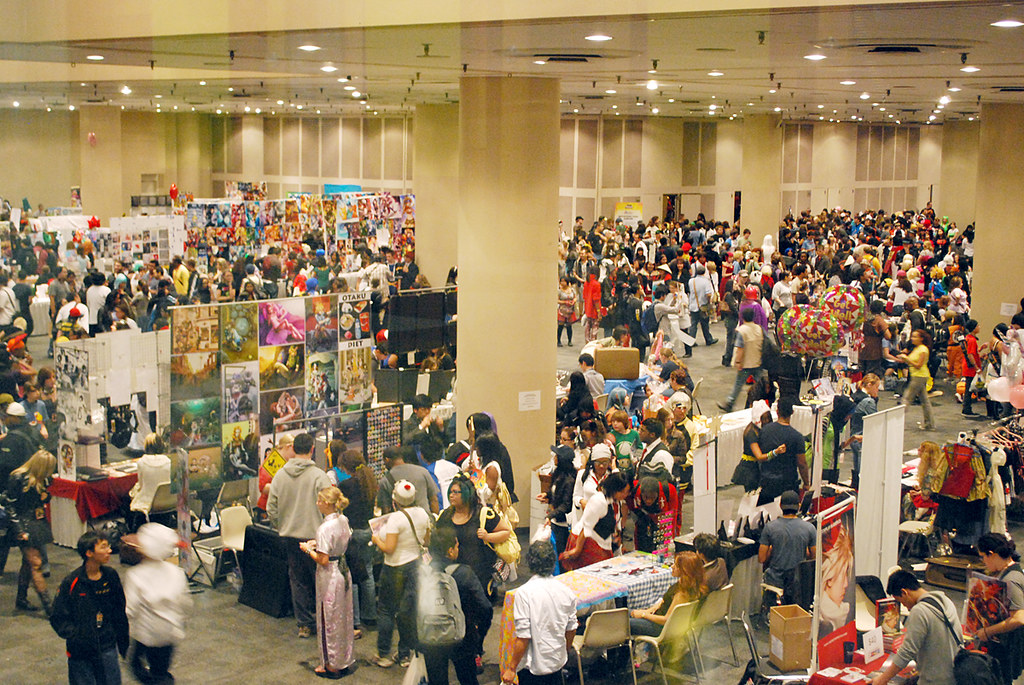
Zenkaikon, the follow-up to Zenkaikon 2009, escaped the previously exclusive and cramped confines of the Radisson Hotel in King of Prussia and took over the entire* Valley Forge Convention Center. The extra space, more than adequate to accommodate the 3,168 paying people who attended (not to mention guests, vendors, artists, staff, and press), was definitely worth the extra four-month wait caused by rescheduling that consequently eliminated the chance for a Zenkaikon 2010. Floor space allowed for generous registration and autograph queues; two Artist Alleys, the main one incorporated into the Dealer’s Room and a small hallway that bordered the upstairs panel rooms; and navigation that was fast and easy compared to last con’s experience of swimming through Con Funk-flavored JELL-O Pudding. The Dealer’s Room, also benefiting from increased breathing room, was capacious and easily navigable, while the sole Main Events room was capable of hosting a riotous crowd.


The abundance of space in the Main Events room, however, also seemed an overbearing presence at times with regards to some of the scheduled panels and acts. On Friday, the Ancient Greek-themed Opening Ceremonies at 1pm brought in a decent crowd, but one that only occupied 1/5 of the room; Uncle Yo’s standup around 5 pm almost filled the main section of the same space but saw sparsely populated wings; and Gelatine’s concert at 7 pm catered to roughly 17 people total (some of whom unfortunately and very noticeably left during the performance). Though I didn’t attend them, events such as the Sakura Cosplay Ball Dance, its after-party, the masquerade, as well as anything involving guests Vic Mignogna and Todd Haberkorn most likely saw much better attendance due to scheduling (at least).

Thankfully, the echoes of footsteps audible on Friday were stifled by Saturday’s deluge of congoers. The main parking lot was mostly full as of 10 am, registration lines snaked with eager attendees, and the aisles between rows of dealer tables bustled with patrons. Almost every panel I attended seemed to bring in a decent size audience that either almost or completely filled generously sized rooms. Some panels even turned people away due to being over capacity. Sadly, I left early on Sunday and did not get a chance to gauge attendance. I hope the trend continued; the last panel I saw, Charles “Anime Anthropologist” Dunbar’s Miyazaki presentation, was pretty full.


As with the previous Zenkaikon, events scheduling was a bit awkward. Some of the troubles could be pinned on the fact that other groups had reserved certain rooms in the convention center during the con and Zenkaikon had to work around such obstacles, but the programming coordination, set to 15 minute intervals, led to awkward overlaps that often forced attendees to decide whether to leave early or arrive late if seeing consecutive panels in separate rooms. With that said, room proximity and general utilization of the convention center’s layout made for effortless transitions between events.

There were myriad points of interest, enough to cause internal conflict within even the most focused con-goer. Regarding live music, NYC’s Gelatine put on a fun, energy-filled show – I regret not being able to see them for their second concert on Sunday, and Tokyo’s own Rose Noire gave their U.S. concert debut to the applause of many decked out in goth/lolita fashion. Of course there was no shortage of good panels. Some of my favorites included “Iron Artist,” “Feminism and the Ladies of Final Fantasy,” and Charles Dunbar’s Modern Mythology and Miyazaki sessions. Zenkaikon also hosted karaoke, electronic and tabletop gaming, as well as a con-long LARP (Live Action Role Play) event. All this was supplemented by video rooms showing a decent range of anime and live action series and movies.

Panels and guests weren’t the only focus of this heartfelt convention. Held just one week after Japan was subject to an earthquake as well as the resulting tsunami and nuclear plant crises, Zenkaikon put sympathy front and center. $3,750 in donations were collected throughout the venue, supplemented by some dealers and artists passing on all or a portion of their profits towards specific charities of their choice. Perhaps the most heartwarming sight was that none of said donation stations were ever empty, illustrating the love and concern shared by all attendees for the nation and people whose culture and art have given us so much.


Thanks to a very dedicated staff (I overheard members on many occasions offering to forsake breaks in order to help out wherever needed), Zenkaikon was efficiently run and easy to enjoy. The availability of a Press Ops room was also a welcome addition for productivity as well as actual and proverbial battery recharging, and the Scanticon Hotel’s bar certainly didn’t hurt either. At its current rate of expansion (there were 1,988 attendees in 2009), I have no doubt that Zenkaikon will fill those spacious rooms without any problem and for very good reasons. Looking forward to 2012!

* minus select rooms dedicated to other organizations**
**what other organizations? THERE IS ONLY ZENKAIKON!!!


Click here for more of our Zenkaikon 2011 coverage

Continue reading... | Write a comment

Zenkaikon 2011: Final Feminism - Evolution of Game and Mindset

2 comments


Kathryn Hemmann, presenter of “Feminism and the Ladies of Final Fantasy,” is a graduate student in the East Asian Languages and Civilizations Department at the University of Pennsylvania. Self-described as being involved with the semi-professional study of literature and cinema, Hemmann was spurred into questioning the presence and presentation of feminist ideology in the Final Fantasy (FF) series by comments made on fan sites that lauded the fact that there was “finally” a feminist incarnation of the game (XIII).
Until those types of statements caught her attention, Hemmann operated under two assumptions: that female characters can kick ass and take names as well as the male characters, and that “while the female characters are very, very pretty, so too are the male characters.” She didn’t think FF characters were portrayed as misogynistic or contributed to the propagation of any sort of misogyny, nor did the characters seem sexist or subject to sexism. However, Hemmann’s panel, focusing on the evolution of FF from phallocentric to gender-neutral, shows just how far the series has come in terms of granting its male and female characters equal opportunities despite inherent and universal physiological differences ... you know, feminism.


Along with its belief that no one should be judged or discriminated against based on their sex/gender, feminism maintains that boys and girls are constantly subjected to sexist social messages throughout their development. Case in point: the hundreds of hours spent playing RPGs (Role Playing Games) such as FF. The more players let themselves get absorbed into the fantastical worlds presented in such games, the more those same players are subject to messages conveyed intentionally via the game’s plot as well as unintentionally by the characters’ designs, roles, and dialogue. This is why Hemmann believes it is important to have strong female characters, free from vilification, who can serve as equally strong role models to those at the controller. Her panel explores three characters who uniquely exemplify, though traits and their contrast with history, the evolution of feminism in FF: Rydia (IV), Aerith (VII), and Fran (XII).

To provide a sense of history against which feminist progress in FF can be argued, Hemmann pointed out that early incarnations of the game had male directors; were intended for male audiences; and, with the exception of X-2, XIII, and VI, made the player’s character and primary hero male. This phallocentrism propagated the dominance of the heterosexual male economy of desire, where men are sexual subjects and women are sexual objects (boy gets the sword, boy gets girl, not vice-versa). FF becomes less phallocentric with each successive installment starting with IV, which introduces an extensive cast of characters with unique personalities, capabilities, and back-stories.

Rydia from Final Fantasy IV One of said characters is Rydia, who is endowed with a strong back-story, is responsible for saving Cecil, and brings value to her party with summon spells and what is portrayed as lethal black magic. This combination of these traits makes her a strong playable character worthy of player investment. Hemmann points out, however, that Rydia is never more than a supporting character in terms of strength because of the game’s MP limitations and negative connotations dealing with magic (innate, female) vs. brute force (skilled, male). Rydia also falls short in being portrayed as three-dimensional due to her sexualized outfit and almost total lack of interiority, the combination of which makes her a blank slate onto which male players can project their desires concerning this mysterious femininity.


Another pivotal character in the evolution of feminism in FF is Aerith, whose booklet description comes dangerously close to forcing upon her the tropes that define a Mary Sue. This character can never be a true Sue, however, because she does not serve as writer or reader stand-in. That role is for Cloud Strife, who is set up to have Aerith as his love interest. Thus her characteristics don’t make her someone every player wants to “be,” but be “with.” As with Rydia, Aerith’s traits are designed to bolster the egos and libidos of male players. However, female players have claimed the same traits to be empowering because of the effect they had on the male protagonist.

Tifa from Final Fantasy VII In contrast to Aerith, stands Tifa: a woman who “kicks ass, runs her own bar, and has hundreds upon hundreds of lines of dialogue.” Hemman said she enjoyed looking up at Tifa despite the graphicness of looking up her skirt as she posed for her victory stretch at the end of every battle. As revealing as it is, Hemmann says, Tifa’s pose is not sexist but empowering in the eyes of female players. That female gaze brings an antidote to the objectifying gaze of males.

Fran from Final Fantasy XII What character better emphasizes objectified desire than FFXII’s Fran, right? She's tall and beautiful, has bunny ears, and wears a skimpy outfit comprised of black leather bondage gear. But Hemmann makes the point that while Fran’s exotic character design seems to be drawn for pure male sexual viewing pleasure, the characterization is not sexual in any way and is instead meant to signify her standing within her race in the context of the game. Older and more mature than other characters, Fran is involved in a relationship to a male partner that is characterized as friendly yet professional. Fran comes pre-equipped with a bow, but can be made into a “dual-handed weapon-wielding tank of a melee fighter” if so desired as leveling up is determined by equipped items rather than gender.

Initially in Final Fantasy, female characters were nothing more than static supporting characters for the dynamic male heroes. As the series continued, women in these games developed personality, inner thought, and strength. No more were female characters defined by who loved them. Instead, appropriate and realistic motivations were derived from who they wanted to be and what they wanted to accomplish as based on intricate back-stories. While female empowerment has been slow, it has been steady. Evidence as keenly picked out and analyzed by Hemmann smartly illustrates subtle and blunt changes within the context of both game and ideology, identifying female gamers and their gaze as a controlling force in an ever-evolving world.


Click here for more of our Zenkaikon 2011 coverage

Continue reading... | Write a comment

Ani-Gamers at Zenkaikon 2011

0 comments

Zenkaikon 2011 - March 18-20, 2011

I’m looking forward to returning to Zenkaikon this year (March 18-20 at the Valley Forge Convention Center in King of Prussia, PA). Its last incarnation was cramped but chuck full o’ goodness. This time around, I’m told accommodations are more spacious, and the schedule looks to be rather impressive to boot. After the break, you’ll find the hourly breakdown of events I plan on attending.  If anything is doubled or overlaps, I still haven't quite made up my mind. And as a reminder: if you see a pile of walking chess pieces pass by, say hi!

Ink’s (super-tentative) Zenkaikon Schedule:

Friday:
11:30 am -12:30 pm - Giant Robot Openings from 1963 to 1984
1:00-2:00 pm - Opening Ceremonies
3:00-5:00 pm - Birdy the Mighty: Decode
5:00-6:00 pm - Uncle Yo – Stand-up for Geeks
6:00-7:00 pm - Living as Otaku in Japan
7:00-8:00 pm - Gelatine Concert
8:15-9:15 pm - Show and Tell with Todd Haberkorn
9:30-11:45 pm - Anime Parliment
12:00-2:00 am - Robogeisha

Saturday:
10:00-11:00 - Iron Artist
12:30-2:00 pm - Modern Mythology
2:00-2:45 pm - 10 Things I Hate About Webcomics
3:00-3:30 pm - AMV Contest
3:30-4:30 pm - Sacred Symbols and Giant Robots
4:30-5:15 pm - Losing Should Be Fun
6:00-8:00 pm - Masquerade
9:00-9:30 pm - Rose Noire Concert
9:30-10:30 pm - Where’s Our Flying Cars and Hoverboards
9:30-10:30 pm - The Great Debates
10:45-11:45 pm - Anime One Night Stands
11:00 pm -12:00 am - Guests Uncensored

Sunday
9:00-10:00 am - Superheroes of the Silver Screen
10:15-11:15 am - Castles, Forests, and Bath Houses
12:30-1:30 pm - Anime Press Your Luck
2:30-3:30 pm - Closing Ceremonies

Click here for more of our Zenkaikon 2011 coverage

Continue reading... | Write a comment

Genericon XXIV: Party in the Tundra

0 comments

Genericon XXIV: February 11-13, 2011

Genericon XXIV is almost upon us! The annual student-run anime, sci-fi, and gaming convention held at Rensselaer Polytechnic Institute (RPI) in Troy, NY is going to be a total blast this year, thanks in part to some fantastic guests and panelists who are making their way to the cold, cold north of upstate New York on the weekend of February 11-13.

Who are these wonderful people? Well, they include guests like the Most Dangerous podcasters of Anime World Order, RPI alumna/webcomic artist Jenny Blanchard, independent animators For Tax Reasons, anime voice actor/fangirl magnet Vic Mignogna, Ani-Gamers' very own Uncle Yo, and Japanese-American punk band Uzuhi.

The new featured panelist program rounds out that list with Legend of the Galactic Heroes/Hetalia superfan Walter Amos, Vertical, Inc. Marketing Manager and all-powerful manga expert Ed Chavez, a group of RPI alumni panelists called "The Con Artists," super-powered podcasting duo Erin and Noah of the Ninja Consultant podcast, and the part-time anime bloggers/full-time detectives of the Reverse Thieves blog.

I am a student at RPI and the Public Relations Coordinator for the convention, so my weekend will be comprised mostly of running around trying to make sure everything works well for our attendees. However, I will be making time for two of my own panels: a new "Satoshi Kon Tribute" (7-8pm on Friday), in which I walk the audience through the life and movie-making style of the acclaimed director, and my tried-and-true character design panel, "The Changing Faces of Anime" (3-4pm on Sunday). Uncle Yo will naturally be running his popular stand-up comedy show (3:30-4:30pm on Sunday), as well as "Beyond D&D" (6:30-7:30pm on Saturday) and "Anime One-Night Stands" (1-2pm on Sunday). Our copy editor Sean Kim is also an RPI student, so he might be hanging around the con as well during the course of the weekend.

I know I'm super-psyched about Genericon this year, and I hope I'll get to see some Ani-Gamers readers/listeners up in Troy. If you happen to go to a panel from me or Uncle Yo, feel free to come up afterward and say hi!

Continue reading... | Write a comment

Con Report: New York Comic Con vs. New York Anime Festival vs. You (2010)

4 comments


Click here for Evan's Photo Gallery
Click here for Jewels's Photo Gallery
New York Comic Con / New York Anime Festival
October 8 – October 10, 2010
Jacob Javits Center
New York, NY, USA
Official Site


It's hardly a secret that anime fans are often driven to their fandom by their desire to be a part of something "different." It's one of the primary reasons that anime fans tend to be so much younger than fans of other media. So, what's the most logical thing for Reed Expositions to do with their successful New York Anime Festival, which has been running as the dominant New York-area anime convention since 2007? Obviously, merge it with pop culture mega-event New York Comic Con, where anime fans can finally be integrated with American comic book readers, cartoon fans, sci-fi geeks, and all other manner of nerdy folks. A little counter to the wishes of most anime fans? You bet!

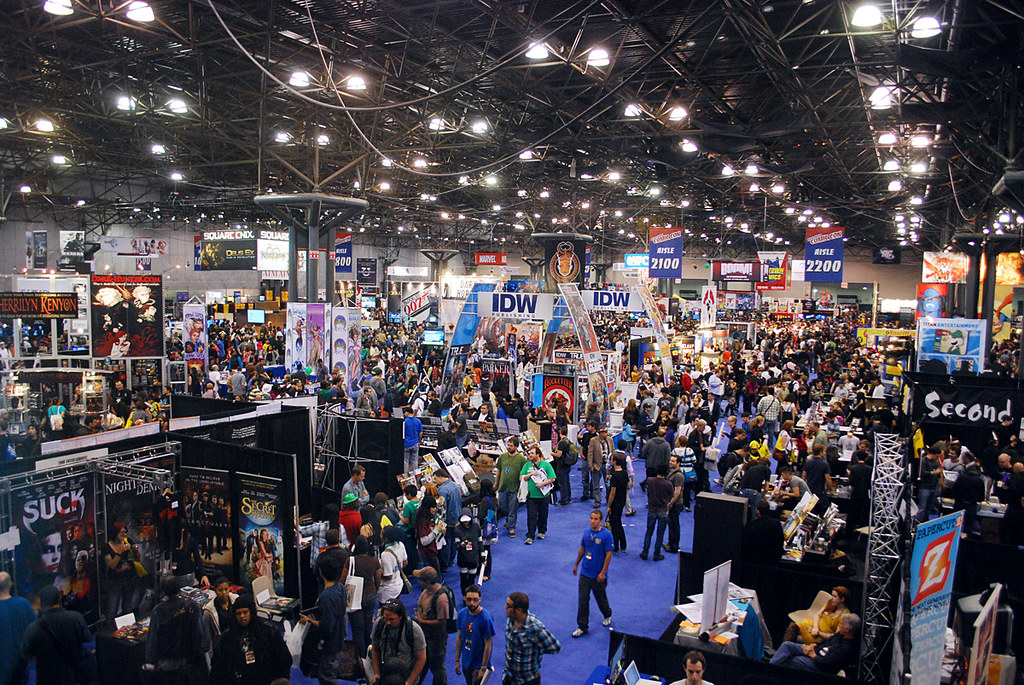
This year, Reed rented the entire Jacob Javits Center, providing a positively massive space for all sorts of panels, events, and dealers. The entire top floor was dedicated to a series of exhibitor halls, featuring everybody from indie comic artists to small press to comic dealers to massive video game companies. Meanwhile, the bottom floors featured dozens of panel and video rooms, the IGN Theater (for large screenings), and — as I dubbed it upon my first visit — the "anime ghetto."

It almost seems like Reed was trying to have it both ways: get the anime fans to come to New York Comic Con without making them feel like they're "just like everybody else." The result? The anime segment was shoved off to the hallway on the south side of the convention, where attendees could go to find the anime panel rooms, maid café, and "Anime Artist's Alley" (yes, completely separate from the Real Artist's Alley).

This setup doesn't make any sense for anyone involved. Clearly regular Comic Con attendees, who tend to skew a little older, don't want to be surrounded by squeeing, glomping anime fans, which explains the implementation of the ghetto. If so, though, why combine the two cons? Surely not for the convenience of anime fans having access to both anime content and comic/game/etc. content, since fans interested in more than just anime would just be attending the all-inclusive Comic Con in addition to (or instead of) the Anime Festival. And the non-anime fans don't gain anything by the addition of anime fans except more people and booths to take up space in the Exhibitor's Hall. It would seem that the only reason for the integration was to save money on running two separate, annual conventions in the exorbitantly expensive Javits Center.

The 'anime ghetto,' packed to bursting with frantic young anime fans Speaking of space, the hall was a complete nightmare to navigate. Open until 7pm on Friday/Saturday and 5pm on Sunday, the Exhibitor's Hall was absolutely massive, and yet was filled with people at all times of the day. In fact, due to the intense masses of people throughout the Javits Center (but particularly in the Exhibitor's Hall), it took me a full 15-20 minutes to get to a booth from the anime hall. That's right, my "commute" to and from a booth required 30-40 minutes of my time, due to both distance and volume of people.

So while anime fans might enjoy the feeling of being "separate" from those "un-cool" comic fans down the hall, the inconvenience of having their anime-specific dealers right next to giant booths featuring Michael Jackson dancing games neutralizes any sense of uniqueness. Most anime fans spend the bulk of their time in the Dealer's Room at any convention, so the all the integration seems to have done is made it harder for everybody to move around the con by stuffing everyone in one Exhibitor's Hall. Additionally, the inconvenience of getting back to the anime hall — which featured a number of great panels and events — made it utterly impractical for anyone but the most hardcore con-goers. (In fact, one of my friends never stepped foot in the anime ghetto except to see the Gundam 00 movie premiere.)

I'm being very harsh on the convention, so to be fair I should point out that the programming itself was still top-notch at this year's NYAF. A number of East Coast anime gurus (the Reverse Thieves, Charles "Anime Anthropologist" Dunbar, the Ninja Consultants) ran fascinating panels, companies from FUNimation to Vertical to Bandai Entertainment held industry panels, and guests — both official and otherwise — like Masahiko Minami and Minori Chihara made NYAF's programming well worth checking out for fans both young and old.

On the non-anime side of things (which I only really got to experience through the Exhibitor's Hall), Comic Con continued to prove itself to be a stunning hub of pop culture for the East Coast. With giant video game booths, movie studios, local comic dealers, and independent artists, the show provided a little something for everyone, even if navigating the mass of shuffling shoppers and obnoxious cosplay photographers was often terribly frustrating.

The Exhibitor's Hall, featuring both Anime Fest and Comic Con booths As I mentioned earlier, I don't think that this strange merger-but-not-merger is good for anyone on either side of the fence. The supposed convenience of having lots of anime content at Comic Con didn't amount to anything in practice due to the long commute between the anime section and everything else, and the Comic Con attendees still had to deal with anime fans clogging up their dealer's room hallways and registration lines.

I only see two viable solutions to this problem, and both are bound to leave some people unhappy. One: completely integrate the two cons, essentially making it "New York Comic Con, but with more anime content than usual." Two: separate them into two different conventions at different times, just like previous years. The second option is not going to happen for obvious reasons (i.e. Reed has already committed to the combination), but the first option makes a lot of sense. If you're going to merge, go all the way. Anime fans will have to learn to be more mature in a con setting and Comic Con regulars will have to just suck it up when faced with the occasional (and often understandable) immaturity of teenage cosplayers.

Sure, young anime fans might be disappointed that they're not "special" anymore, but if you're screening things like The Disappearance of Haruhi Suzumiya and inviting guests like Minori Chihara, what are they going to do? NOT attend? Without another anime con competitor in the NYC area, I wouldn't count on it.


Special thanks to Jewels Lei for providing a fantastic photo gallery from both the Comic Con and Anime Festival, and Hisui of the Reverse Thieves blog for providing me with a roof over my head and a bed to sleep on over the weekend.


Click here for more of our New York Comic Con/Anime Festival 2010 coverage.

Continue reading... | Write a comment

NYCC 2010: Photo Gallery

0 comments


Don't you worry, my New York Comic Con 2010 con report is on its way, but I wanted to give everyone a glimpse of the convention before I get my (belated) written report up. The above gallery is made up of photos taken by Jewels Lei, a photographer who was already planning on attending the con and offered to help cover it for Ani-Gamers. She was a phenomenal help, since I was the only writer who was able to get to the convention (and I don't happen to be a great photographer).

I'd like to thank Jewels immensely for coming through on such short notice and getting such great photos of panels, cosplayers, and (to my delight) Gundam models, among other things. Let us know what you think of her photos, and look forward to my Comic Con writeup later this week!


Click here for more of our New York Comic Con 2010 coverage.

Continue reading... | Write a comment

NYCC 2010: Lost in Shadow (Wii) Hands-on

0 comments

Lost in Shadow (Wii)

Last weekend, at the New York Comic Con, I had a chance to play through a few levels of a debug version of Lost in Shadow, a new platformer game for the Nintendo Wii, developed and published by Hudson Soft and directed by Osamu Tsuchihashi (designer for Dance Dance Revolution: Mario Mix, graphic designer for Mario Party 5-7).

Lost in Shadow follows a mysterious boy who, as we see in the first of its dialogue-free cinematics, has had his shadow cut away from his body by a dark, sword-wielding figure atop a tower. Now, the shadow, which has been thrown down to the ground and left without its memories, must climb to the top of the tower (which looks conspicuously similar to EVERYTHING from Shadow of the Colossus [2005]) to reunite itself with its original form. The twist: as the shadow, you can only interact with other shadows, not real objects.

The central gameplay mechanic will be instantly familiar to anybody who has ever played a traditional two-dimensional platformer. You run left to right along mostly horizontal surfaces, dodging arrows and enemies (which are also pure shadows without physical analogues, just like your character) in order to reach a door at the end of each level. In fact, according to the Hudson rep I spoke with, Tsuchihashi's primary inspiration for the mechanics was the original Prince of Persia (yep, the NES one).

However, what adds an interesting new dimension to the tried-and-true platforming formula of Lost in Shadow is the simple fact that most of the platforms are actually shadows of foreground objects projected on the background. Thus, the game actually forces you to rethink the way your character relates to the platforms he is standing on. Initially the only complexity lies in keeping your mind focused on the shadows despite changes in the objects casting them and the surfaces upon which they are cast, but later the game introduces areas called "Shadow Corridors" which feature more complex ideas like Echochrome-esque 90-degree perspective shifts and even three-dimensional movement.

Just playing as a shadow without any effect on the real world rather limits your options, however, so Hudson includes another character, a small fairy-like creature called a sylph who floats by your side but can become your Wiimote pointer at any time to help you past obstacles. Her main function is to find objects that can be energized and then moved, creating new shadow shapes for you to climb over, but there are some particularly mind-bending sequences where she can be used to move a light source, thus stretching all of the shadows on screen and making it possible to heavily modify the entire shadow landscape.

Some of the individual pieces have been used before (especially the cliché "ruinous fantasy adventure" aesthetic), but the overall effect of Lost in Shadow is quite striking in its novelty, and makes for an experience full of wide-eyed surprise as you are forced to rethink many of the basic physical properties of the platformer genre. Watch out for this innovative title when it hits North American stores on January 4, 2011 and look out for a full Ani-Gamers review in the near future.


Click here for more of our New York Comic Con 2010 coverage

Continue reading... | Write a comment

Recent Posts